






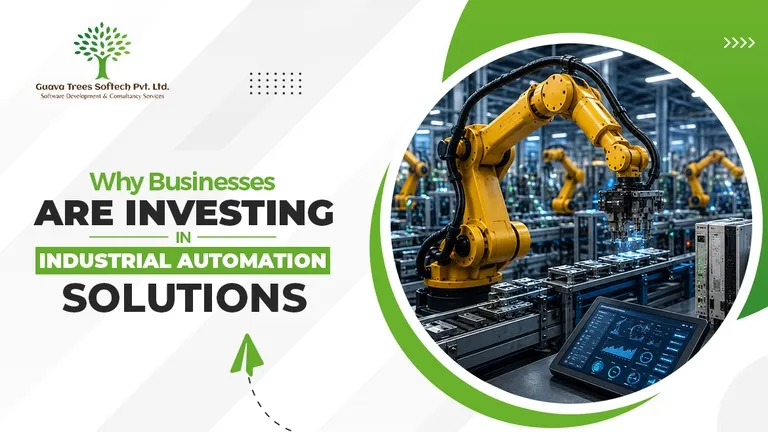

In today's rapidly evolving industrial landscape, businesses are under constant pressure to improve efficiency, reduce operational costs, maintain product quality, and remain competitive in increasingly demanding markets. As industries embrace digital transformation, one technology trend continues to stand out as a game changer: industrial automation.
From manufacturing facilities and warehouses to logistics centers and processing plants, organizations across sectors are investing heavily in automation solutions to streamline operations and drive sustainable growth. What was once considered an advantage is now becoming a necessity for businesses aiming to thrive in a technology-driven economy.
At Guava Trees Softech, we help organizations leverage advanced automation technologies to enhance productivity, improve operational visibility, and unlock new levels of efficiency. In this article, we explore why industrial automation is becoming a strategic investment for businesses worldwide and how it is reshaping the future of industry.
Understanding Industrial Automation
Industrial automation refers to the use of control systems, software, machines, sensors, robotics, and intelligent technologies to perform tasks with minimal human intervention. These systems are designed to monitor, control, and optimize industrial processes while improving accuracy and consistency.
Modern industrial automation combines technologies such as:
- Artificial Intelligence
- Machine Learning
- Internet of Things (IoT)
- Robotics
- Cloud Computing
- Data Analytics
- Supervisory Control and Data Acquisition (SCADA) systems
- Programmable Logic Controllers (PLCs)
Together, these technologies create intelligent ecosystems capable of making real-time decisions, identifying inefficiencies, and continuously improving operational performance.
The Growing Need for Operational Efficiency
One of the primary reasons businesses invest in industrial automation is the need to improve operational efficiency.
Manual processes often involve repetitive tasks that consume valuable time and resources. Human errors, delays, and inconsistencies can significantly impact productivity and profitability. Automation helps organizations eliminate these challenges by ensuring tasks are performed accurately and consistently.
Automated systems can operate around the clock without fatigue, allowing businesses to increase output while maintaining high quality standards. This continuous operation leads to better resource utilization and improved production capacity.
For businesses seeking long-term growth, automation provides a scalable foundation that supports increasing demand without requiring proportional increases in labor costs.
Reducing Operational Costs
Cost reduction remains a major business objective across industries. While implementing automation solutions requires an initial investment, the long-term financial benefits often outweigh the upfront costs.
Industrial automation helps reduce expenses in several ways:
- Lower labor costs for repetitive tasks
- Reduced production errors and waste
- Improved energy efficiency
- Minimized equipment downtime
- Faster production cycles
- Better inventory management
By optimizing resource allocation and reducing inefficiencies, businesses can achieve significant cost savings while improving overall profitability.
Enhancing Product Quality and Consistency
In highly competitive markets, maintaining consistent product quality is critical for customer satisfaction and brand reputation.
Human-operated processes can introduce variations that affect product quality. Automated systems follow predefined parameters with exceptional precision, ensuring uniform results throughout the production process.
Advanced automation solutions can also perform continuous quality monitoring, identifying defects or deviations in real time. This allows businesses to address issues immediately before they impact larger production volumes.
As a result, organizations can deliver superior products while reducing waste, rework, and customer complaints.
Improving Workplace Safety
Safety is a top priority in industrial environments. Many industries involve hazardous tasks that expose workers to risks such as heavy machinery, extreme temperatures, toxic substances, and repetitive physical strain.
Industrial automation significantly improves workplace safety by allowing machines and robotic systems to handle dangerous operations.
Automated monitoring systems can also detect potential safety issues before they become critical, helping organizations maintain compliance with industry regulations and safety standards.
By reducing human exposure to high-risk environments, businesses create safer workplaces while protecting their most valuable asset: their workforce.
Data-Driven Decision Making
Modern automation solutions generate vast amounts of operational data. This information provides valuable insights into production performance, equipment health, resource utilization, and process efficiency.
Through real-time analytics and intelligent reporting delivered via comprehensive dashboards, decision makers gain visibility into every aspect of operations.
Businesses can use this data to:
- Identify bottlenecks
- Predict maintenance needs
- Optimize production schedules
- Improve supply chain efficiency
- Forecast demand more accurately
- Reduce downtime
Organizations that leverage data effectively can make faster, more informed decisions that drive measurable business outcomes.
Supporting Predictive Maintenance
Equipment failures can lead to costly downtime, missed deadlines, and reduced productivity.
Traditional maintenance approaches often rely on fixed schedules or reactive repairs after breakdowns occur. Industrial automation introduces predictive maintenance capabilities that monitor equipment performance continuously.
Using sensors and intelligent analytics, automation systems can identify early signs of wear, overheating, vibration abnormalities, and other indicators of potential failure.
This allows maintenance teams to address issues proactively before they result in expensive disruptions. Predictive maintenance not only reduces downtime but also extends equipment lifespan and lowers maintenance costs.
Meeting the Demands of Industry 4.0
The rise of Industry 4.0 has accelerated the adoption of automation technologies across the globe.
Industry 4.0 represents the integration of digital technologies into industrial processes, creating smart factories and connected ecosystems where machines, systems, and people communicate seamlessly.
Businesses investing in industrial automation position themselves to take full advantage of Industry 4.0 capabilities, including:
- Smart manufacturing
- Real-time process optimization
- Connected production environments
- Intelligent supply chains
- Advanced analytics
- Autonomous operations
Organizations that fail to modernize risk falling behind competitors who are embracing these transformative technologies. For many, the journey begins with digital transformation and legacy system migration.
Addressing Workforce Challenges
Many industries are facing labor shortages and increasing difficulty in recruiting skilled workers for repetitive or physically demanding roles.
Automation helps businesses address these workforce challenges by handling routine tasks while allowing employees to focus on higher-value activities such as innovation, problem solving, quality management, and customer engagement.
Rather than replacing human talent entirely, modern automation creates opportunities for employees to develop new skills and contribute more strategically to organizational success.
Gaining a Competitive Advantage
In today's business environment, speed, efficiency, and adaptability are critical competitive differentiators.
Companies that invest in industrial automation gain the ability to:
- Respond quickly to market changes
- Scale operations efficiently
- Improve customer satisfaction
- Reduce production costs
- Accelerate innovation
- Maintain consistent quality standards
These advantages help businesses strengthen their market position and build long-term resilience in an increasingly dynamic global economy.
How Guava Trees Softech Helps Businesses Embrace Automation
At Guava Trees Softech, we understand that every organization has unique operational requirements. Our industrial automation solutions are designed to help businesses optimize processes, improve productivity, and achieve sustainable growth.
Our expertise includes:
- Industrial software development
- Process automation solutions
- Intelligent monitoring systems
- Data analytics platforms
- IoT integration
- AI-powered automation systems
- Custom enterprise solutions
By combining industry knowledge with advanced technology, we help organizations navigate their digital transformation journey with confidence.
Final Thoughts
Industrial automation is no longer limited to large manufacturing enterprises. Businesses of all sizes are recognizing its potential to improve efficiency, reduce costs, enhance quality, and drive innovation.
As technology continues to evolve, automation will play an increasingly important role in shaping the future of industry. Organizations that invest in intelligent automation today are positioning themselves for greater agility, stronger performance, and long-term success.
At Guava Trees Softech, we are committed to helping businesses harness the power of industrial automation and build smarter, more efficient operations for the future. Contact our team to explore how industrial automation can transform your operations.
Leave a Reply
Your email address will not be published. Required fields are marked *
Comment Failed
We couldn't submit your comment. Please try again later.
Comment Submitted!
Thank you for your comment. It will be reviewed and published shortly.