







Digital payments have become an essential part of modern websites and mobile applications. Whether a customer is purchasing a product from an e-commerce store, subscribing to a SaaS platform, or booking a service through an app, the payment process needs to be secure, fast, and reliable.
Behind this seamless experience are APIs that allow websites, applications, payment gateways, banks, and other financial systems to communicate with each other. Payment gateway API integration plays a crucial role in connecting these systems and enabling businesses to process online payments without requiring customers to leave the platform.
What Is a Payment Gateway API?
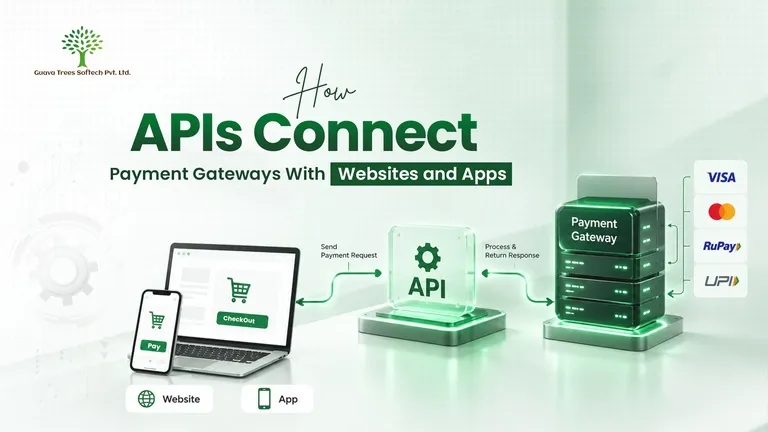
A payment gateway API is a set of protocols that allows a website or application to communicate with a payment gateway. It transfers the information required to initiate, authorize, and complete a transaction.
When a customer enters payment details and clicks the payment button, the website or app sends a request through the API. The payment gateway processes the request by communicating with the relevant financial network and then sends a response back to the application.
This communication happens within seconds, allowing customers to complete transactions without manually moving between multiple systems.
How Payment Gateway API Integration Works
Although the payment process appears simple to the customer, several systems work together in the background.
The typical payment API workflow includes:
- Payment initiation: The customer selects a payment method and submits the order through the website or app.
- API request: The application securely sends transaction information to the payment gateway through its API.
- Payment processing: The payment gateway communicates with banks, card networks, or other payment providers to process the transaction.
- Authorization: The transaction is verified and either approved or declined based on the payment provider's response.
- API response: The payment gateway sends the transaction status back to the website or application.
- Order confirmation: The application updates the order status and displays the appropriate confirmation or error message to the customer.
This entire process allows businesses to provide a smooth online payment experience while keeping the underlying payment infrastructure connected. If you are new to designing this kind of request-and-response flow, our step-by-step guide to API integration covers the fundamentals in more detail.
Connecting Payment Gateways With Websites
For e-commerce websites and online platforms, payment gateway integration allows businesses to accept digital payments directly through their websites. Developers can use payment gateway APIs to integrate different payment methods based on the requirements of the business and its customers.
A well-designed integration can support:
- Credit and debit card payments
- Digital wallets
- Bank transfers
- UPI and other local payment methods
- Recurring payments and subscriptions
- Refunds and transaction management
The API also allows the website to receive real-time updates about transaction status, helping ensure that payment records and order information remain synchronized. For teams working on the JVM, our walkthrough on integrating a payment gateway in Spring Boot applications shows what this looks like in code.
Connecting Payment Gateways With Mobile Apps
Mobile applications require a similar integration process, but developers must also consider the specific requirements of Android and iOS environments.
A payment API for mobile apps allows applications to initiate transactions and communicate with payment services without requiring developers to build an entire payment processing system from scratch.
For example, when a customer purchases a subscription through an app, the application can send the relevant transaction request through the integrated payment API. Once the payment provider processes the transaction, the API returns the status to the application, which can then update the user's account accordingly.
This enables businesses to create consistent payment experiences across websites, mobile applications, and other digital platforms.
Why Secure Payment API Integration Matters
Payment systems handle highly sensitive financial information, making security one of the most important considerations during API integration.
A secure payment gateway integration should include appropriate authentication, encryption, access controls, and transaction validation. Businesses should also ensure that sensitive payment information is handled according to applicable security and compliance requirements.
Developers typically need to consider:
- Secure API authentication
- Data encryption
- Tokenization of payment information
- Transaction verification
- Secure webhook implementation
- Error and fraud handling
These measures help protect customer information and reduce the risk of unauthorized transactions, and they matter most in regulated environments such as FinTech platforms where every transaction is subject to scrutiny.
APIs and Real-Time Payment Updates
Another important function of payment APIs is enabling real-time communication between systems. Websites and applications need to know whether a transaction has been completed, failed, or requires further action.
Payment webhooks are commonly used for this purpose. A payment gateway can send an automated notification to the application when a transaction status changes.
For example, after a successful payment, the payment provider can notify the website through a webhook. The website can then automatically update the order status, generate a receipt, and trigger the next stage of fulfillment.
This level of automation reduces manual intervention and improves operational efficiency.
Benefits of Payment Gateway Integration
A properly implemented payment gateway API provides benefits beyond simply accepting payments.
Seamless customer experience: Customers can complete transactions directly through the website or app with fewer interruptions.
Faster payment processing: APIs enable automated communication between the application and payment infrastructure.
Operational automation: Successful payments can automatically trigger order confirmation, account updates, invoices, and fulfillment processes.
Scalability: Businesses can integrate additional payment methods as they expand into new markets or customer segments.
Better transaction management: APIs make it easier to manage payments, refunds, recurring billing, and transaction statuses from connected systems.
Common Challenges in Payment API Integration
Payment integration requires more than simply connecting an API. Businesses must account for different payment methods, transaction failures, security requirements, API version changes, and third-party service availability.
Poorly implemented integrations can lead to duplicate transactions, incorrect order statuses, failed payments, or inconsistent customer records. Proper testing, error handling, logging, and ongoing monitoring are therefore essential for maintaining a reliable payment infrastructure. This is also where third-party systems integration experience pays off, because the payment gateway is rarely the only external service in the flow.
Best Practices for Payment API Integration
Businesses should follow a structured approach when integrating payment services into websites and applications. Using official API documentation, secure authentication methods, proper error handling, and reliable webhook validation can significantly improve integration stability.
It is also important to test different transaction scenarios before deployment, including successful payments, failed transactions, refunds, cancellations, and network interruptions.
Regular monitoring and maintenance ensure that the integration continues to work effectively as payment providers update their APIs and security requirements.
Conclusion
APIs are the foundation that allows payment gateways to communicate seamlessly with websites and applications. Through payment gateway API integration, businesses can securely process transactions, automate payment workflows, manage real-time updates, and provide customers with convenient digital payment experiences.
As online transactions continue to grow, businesses need payment infrastructure that is secure, scalable, and capable of supporting changing customer expectations. A well-planned API integration can provide the technical foundation required to build reliable payment experiences across web and mobile platforms.
Build Reliable Payment Integrations with Guava Trees Softech
Guava Trees Softech helps businesses build scalable digital solutions that connect applications, platforms, and third-party services efficiently. From payment gateway API integration and custom application development to API development and system integration, the company focuses on creating reliable technology solutions aligned with specific business requirements.
For businesses looking to integrate secure payment systems into their websites or mobile applications, Guava Trees Softech can help simplify the technical process and build payment infrastructure designed for reliability, scalability, and long-term growth.
Connect with Guava Trees Softech to explore the right payment API integration solution for your business.
Leave a Reply
Your email address will not be published. Required fields are marked *
Comment Failed
We couldn't submit your comment. Please try again later.
Comment Submitted!
Thank you for your comment. It will be reviewed and published shortly.