






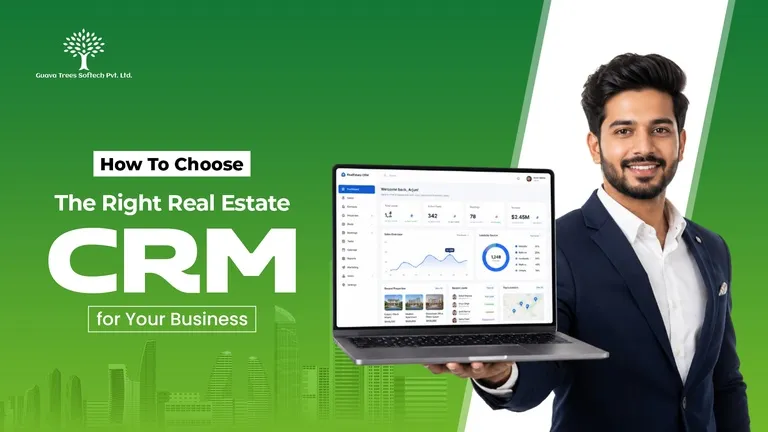

In today’s competitive property market, managing leads, clients, and deals efficiently is crucial for success. This is where a real estate CRM (Customer Relationship Management) system becomes essential. With the right CRM for real estate, businesses can streamline operations, improve client relationships, and boost sales performance.
However, with so many options available, choosing the right real estate CRM software can be overwhelming. Each business has unique needs, and selecting the wrong system can lead to inefficiencies and lost opportunities. At Guava Trees Softech, we build the platforms behind modern property businesses—helping agencies move from scattered spreadsheets and disconnected tools to unified, intelligent client management systems.
In this blog, we’ll guide you through the key factors to consider when choosing the best real estate CRM for your business.
1. Understand Your Business Needs
Before selecting a real estate CRM, it’s important to evaluate your specific business requirements. Are you an independent agent, a small agency, or a large real estate firm?
Different businesses require different features. For example, a solo agent may need basic lead management, while a large firm may require advanced automation, reporting, and team collaboration tools. Identifying your needs will help you choose a customized CRM solution that aligns with your goals. Our custom software development teams tailor real estate platforms to the exact way your agency works—see how we serve the real estate industry.
2. Lead Management and Automation
One of the primary functions of a real estate CRM system is managing leads effectively. The right CRM should allow you to capture, organize, and track leads from multiple sources such as websites, social media, and property portals.
Automation features like follow-up reminders, email campaigns, and lead scoring can significantly improve conversion rates. With automated lead management, you can ensure that no potential client is missed. Our AI and ML services add intelligent lead scoring and predictive routing so your agents spend time on the prospects most likely to close.
3. User-Friendly Interface
A user-friendly CRM interface is crucial for ensuring adoption by your team. If the software is too complex, it can lead to confusion and reduced productivity.
Look for a CRM that offers a clean dashboard, easy navigation, and minimal learning curve. A simple and intuitive real estate CRM platform allows your team to focus more on selling and less on managing software.
4. Mobile Accessibility
In the real estate industry, professionals are often on the move. A mobile CRM for real estate ensures that agents can access client data, property details, and schedules anytime, anywhere.
Mobile accessibility allows for quick updates, instant communication, and better responsiveness to clients. This flexibility is essential for closing deals faster and staying competitive. Our mobile application development teams ship native iOS and Android apps that keep agents productive in the field.
5. Integration Capabilities
A good real estate CRM software should integrate seamlessly with other tools such as email platforms, marketing software, accounting systems, and property listing websites.
Integration helps in creating a unified workflow, reducing manual data entry, and improving efficiency. With integrated CRM solutions, businesses can streamline operations and enhance productivity. Our API development and third-party systems integration capabilities connect your CRM to MLS feeds, marketing platforms, and accounting tools with reliable, observable APIs.
6. Customization and Scalability
Every real estate business is unique, and your CRM should be able to adapt to your processes. Look for a customizable CRM system that allows you to tailor workflows, fields, and reports according to your needs.
Additionally, the CRM should be scalable to grow with your business. As your client base expands, your system should be able to handle increased data and complexity. This ensures long-term usability and value. With our SaaS solutions expertise, we design multi-tenant platforms that scale from a single agent to enterprise brokerages across regions.
7. Reporting and Analytics
Data-driven decision-making is key to success in real estate. A good real estate CRM should provide detailed reports and analytics on sales performance, lead conversion rates, and marketing effectiveness.
These insights help you identify trends, optimize strategies, and improve overall performance. With CRM analytics tools, you can make informed business decisions and maximize ROI. Our analytics dashboard development teams build pipeline, conversion, and revenue views so you act on insights instead of chasing reports.
8. Security and Data Protection
Real estate businesses deal with sensitive client information, making data security in CRM a top priority.
Choose a CRM that offers strong security features such as data encryption, secure access controls, and regular backups. This ensures that your client data is protected and builds trust with your customers—something we engineer for in every platform we deliver.
9. Customer Support and Tr aining
Even the best real estate CRM software can be ineffective without proper support and training.
Look for a provider that offers reliable customer support, onboarding assistance, and training resources. Good support ensures that your team can quickly resolve issues and make the most of the system. Our full SDLC support covers your platform from onboarding through ongoing maintenance and enhancements.
10. Budget and Pricing
Finally, consider your budget when choosing a CRM for real estate business. While it’s important to find a cost-effective solution, don’t compromise on essential features.
Compare pricing plans, subscription models, and included features to ensure you get the best value for your investment. A well-chosen CRM can deliver significant returns by improving efficiency and increasing sales.
Conclusion
Choosing the right real estate CRM is a critical decision that can significantly impact your business growth. By considering factors such as lead management, automation, integration, and scalability, you can find a solution that meets your needs and enhances your operations.
In an industry where relationships and timing are everything, having the right tools can give you a competitive edge. A powerful CRM not only simplifies processes but also helps you build stronger client relationships and close deals more efficiently. Investing in the right technology today will set the foundation for long-term success in the real estate market.
Build Your Real Estate CRM With Guava Trees Softech
Guava Trees Softech provides advanced CRM solutions tailored for the real estate industry, helping you manage leads, streamline operations, and drive growth with ease. From custom CRM development to scalable SaaS platforms and AI-powered lead intelligence, we build the systems modern property businesses run on.
Contact Guava Trees Softech to build your real estate CRM today.
Leave a Reply
Your email address will not be published. Required fields are marked *
Comment Failed
We couldn't submit your comment. Please try again later.
Comment Submitted!
Thank you for your comment. It will be reviewed and published shortly.